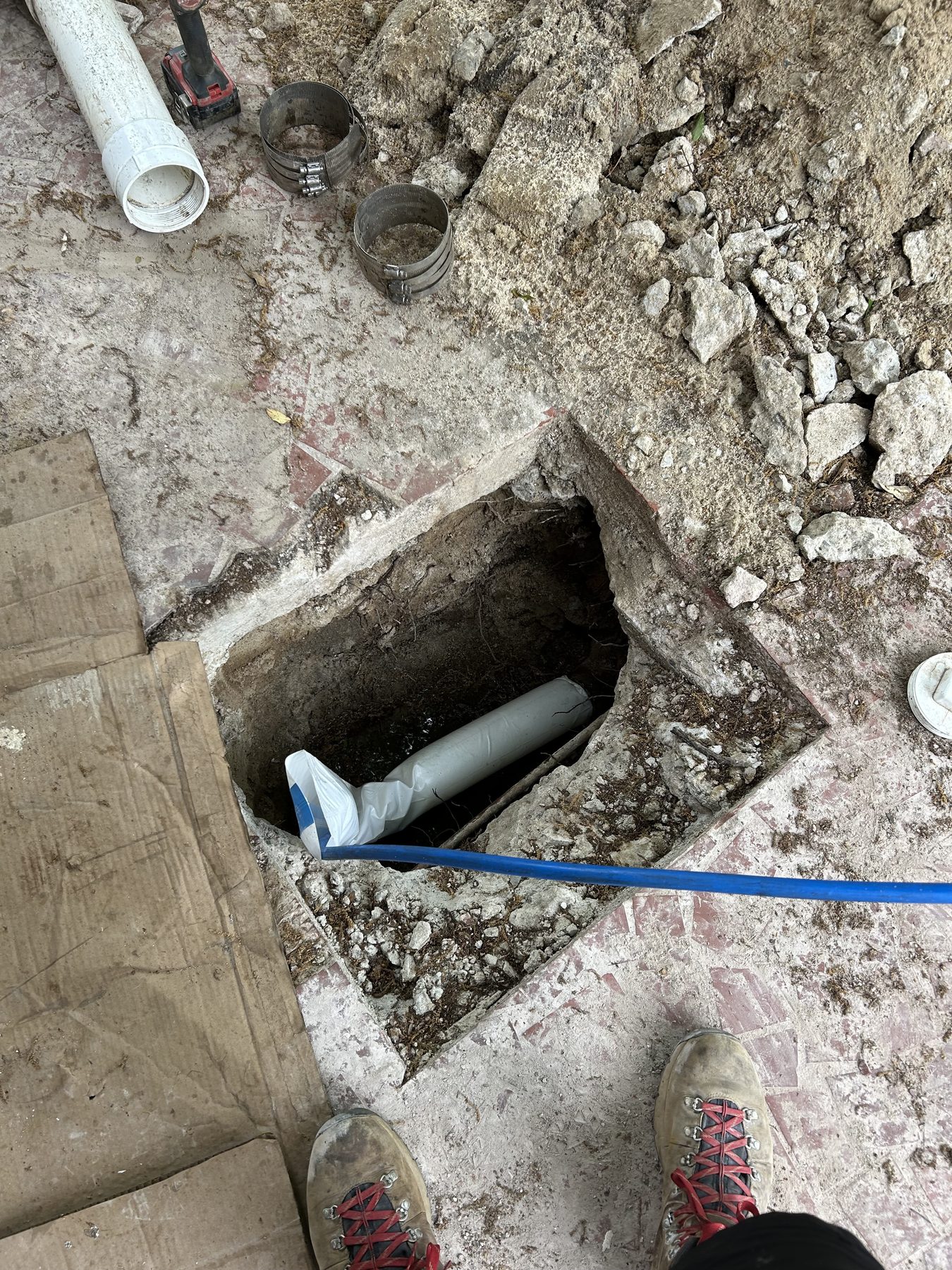
Sewer replacement
For the lines genuinely past saving.
Lining works on a remarkable range of damage — but not everything. When a line has collapsed, severely offset, or lost its shape entirely, it needs replacing, and we will say so rather than sell you a liner that cannot cure.
When lining isn't the answer
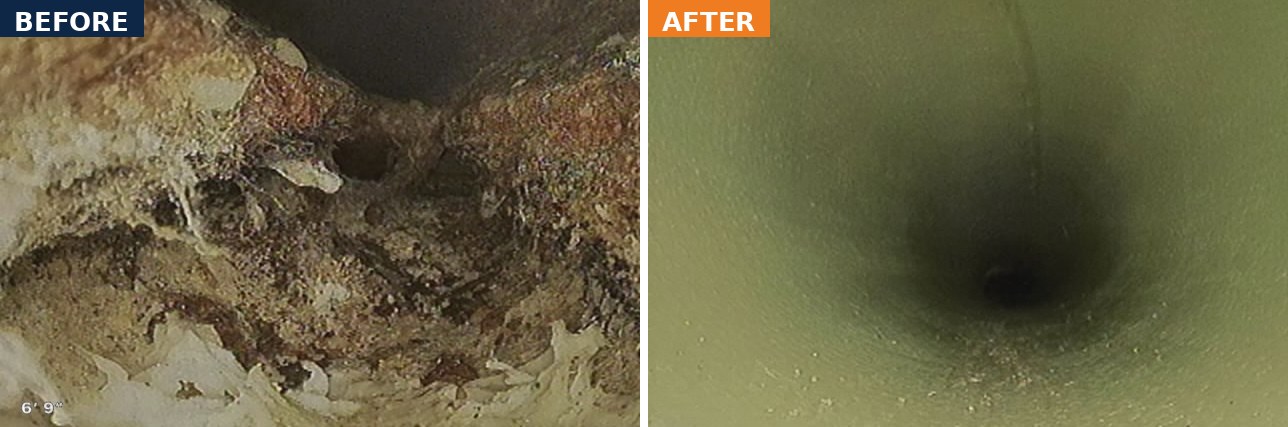
A cured-in-place liner forms a new pipe inside the old one. That requires a host pipe with enough structure left to hold shape while the liner cures against it. Most damage we find still qualifies — cracks, root intrusion, corrosion, channeling, separated joints, even significant deterioration.
What does not qualify is a line that has already failed structurally: a full collapse, a severe offset where the two sections no longer align, a belly deep enough to hold standing water permanently, or a run so far gone that there is no continuous host left. In those cases we excavate and replace.
The camera inspection is what settles it. You see the same footage we do, and you keep a copy.
How we keep replacement contained
- Open the shortest run that reaches the failed section rather than trenching the whole lateral
- Locate and protect utilities, irrigation, and root systems before breaking ground
- Backfill and compact in lifts so the surface does not settle later
- Quote landscaping, hardscape, and concrete restoration up front, itemized
- Line the remaining run where it makes sense, so the repaired section is the last one you deal with
What goes wrong underground
The problems we solve
Root intrusion
Roots find joints and cracks, then grow until the line blocks and backs up.
Cracked or deteriorated pipe
Aging pipe develops cracks and breaks that lead to leaks and failures.
Joint separation
Separated joints let soil and water infiltrate, causing sinkholes and voids.
Corrosion and material failure
Corroded or deteriorated pipe risks collapse and loss of service.
Costly disruption
Traditional excavation means torn-up landscaping, lost parking, and unhappy tenants.
Our solution
Trenchless pipe lining
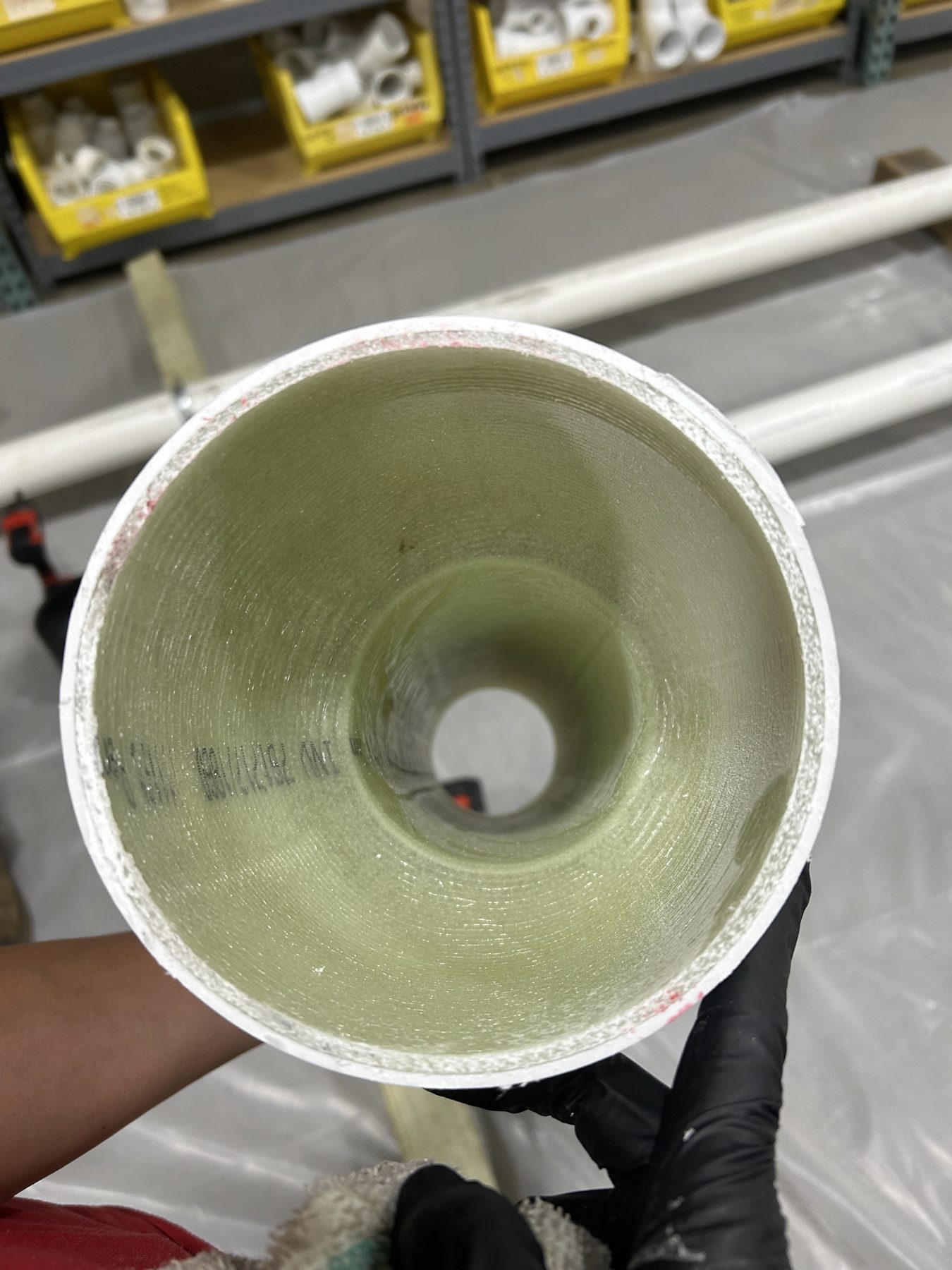
Our UV cured-in-place pipe (CIPP) system restores damaged pipe from the inside out, forming a new structural pipe within the existing one. No trench, no torn-up property.
- No excavation
- Minimal disruption to residents, tenants, and daily operations
- Long-lasting results that prevent future problems
- Works on sanitary, storm, and other gravity-flow pipe
- Fits pipe from 3 inches to 8 inches in diameter
Pipe materials we rehabilitate
- Vitrified clay (VCP)
- Cast iron
- PVC
- Orangeburg
- Concrete
What you avoid
Conventional replacement may add
- Excavation and backfill
- Landscaping and hardscape restoration
- Asphalt or concrete replacement
- Traffic control and permitting
- Longer project timelines
- Increased tenant or occupant disruption
Every one of those is a line item on a dig-and-replace quote. Lining removes most of them.
Commercial & institutional
Fix the pipe. Don't close the property.
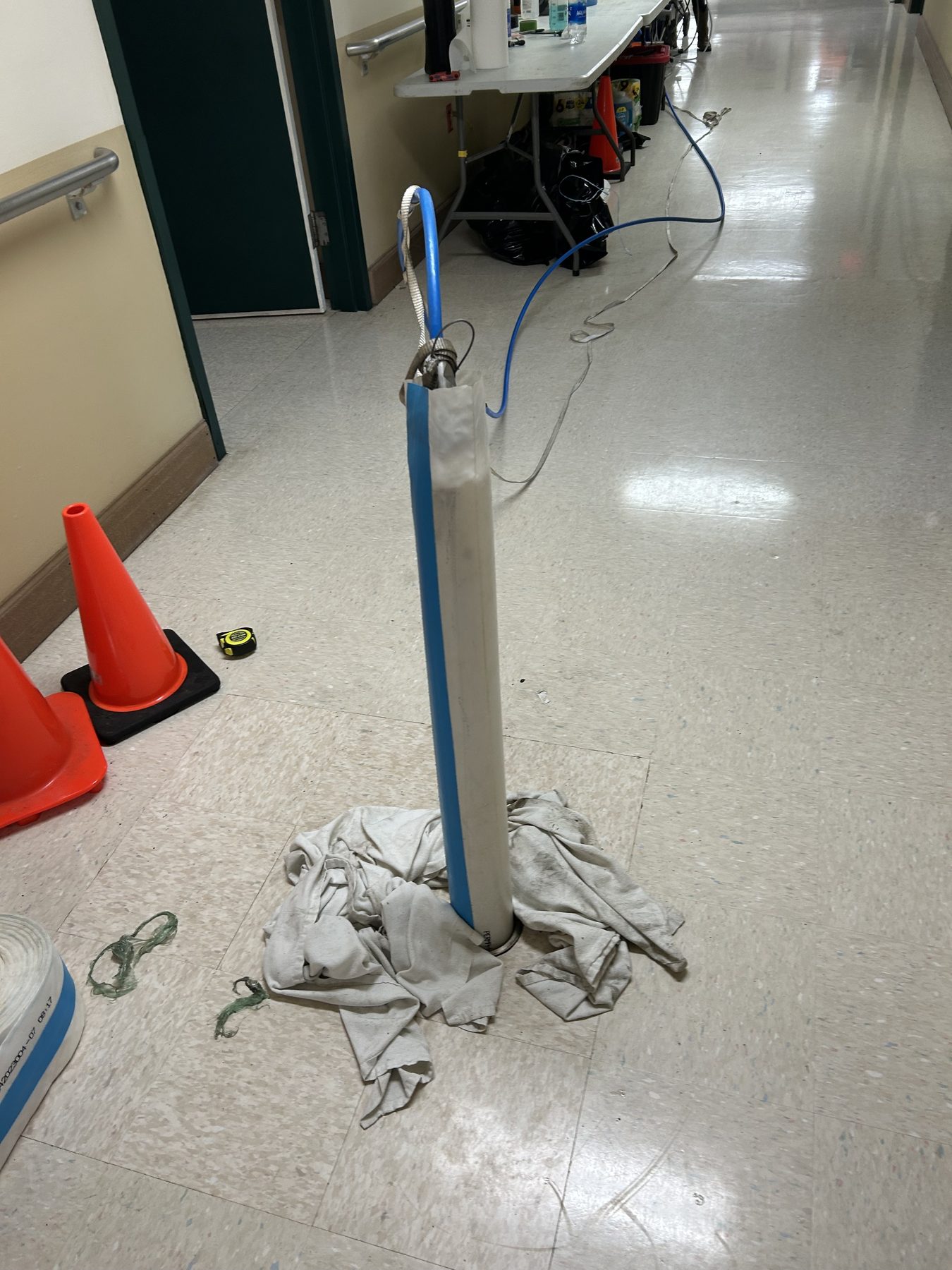
A pipe failure at a multi-tenant or institutional property is never only a plumbing problem. It's occupant complaints, liability exposure, and unplanned capital spend. We inspect aging infrastructure before it fails and repair it without excavation, road plates, or lost parking.
- Avoid unplanned emergency repairs and occupant complaints
- Protect curb appeal, landscaping, and property value
- Reduce liability from backups, sinkholes, and property damage
- Extend the life of underground infrastructure
- Plan proactively and budget more effectively
Where we work
Service areas
Full service
Pipe lining, camera inspection, jetting, drain cleaning, and sewer replacement.
Pipe lining statewide
Trenchless CIPP lining, anywhere in South Carolina.
Frequently asked
Sewer replacement questions
When is replacement the right call instead of lining?
When the pipe has lost its structural shape — a full collapse, a severe offset joint, a section that has separated and dropped, or a line so deteriorated there is nothing left to line against. A liner needs a host pipe to cure inside. If the host is gone, lining is not an option and we will tell you that plainly.
Do you push replacement when lining would work?
No. Lining is our specialty and it is usually the better outcome for the customer, so our incentive runs the other way. Every recommendation follows a camera inspection you are welcome to watch, and you get the footage.
How much of the yard gets dug up?
Only what the work requires. We open the shortest run that reaches the failed section, protect the surrounding area, and backfill and compact properly. Landscaping, hardscape, and concrete restoration are quoted separately and up front so nothing is a surprise.
Can you replace part of a line and line the rest?
Often, yes. A common approach is excavating and replacing a collapsed section, then lining the remaining run to stop the root intrusion and infiltration that caused the failure. It costs less than a full dig and leaves you with a line that will not need attention again for decades.
Let's solve the problem — without disrupting your property.
Call or text for a camera inspection and a straight answer about whether the line needs lining, cleaning, or replacement.
Call or text 803-814-5544