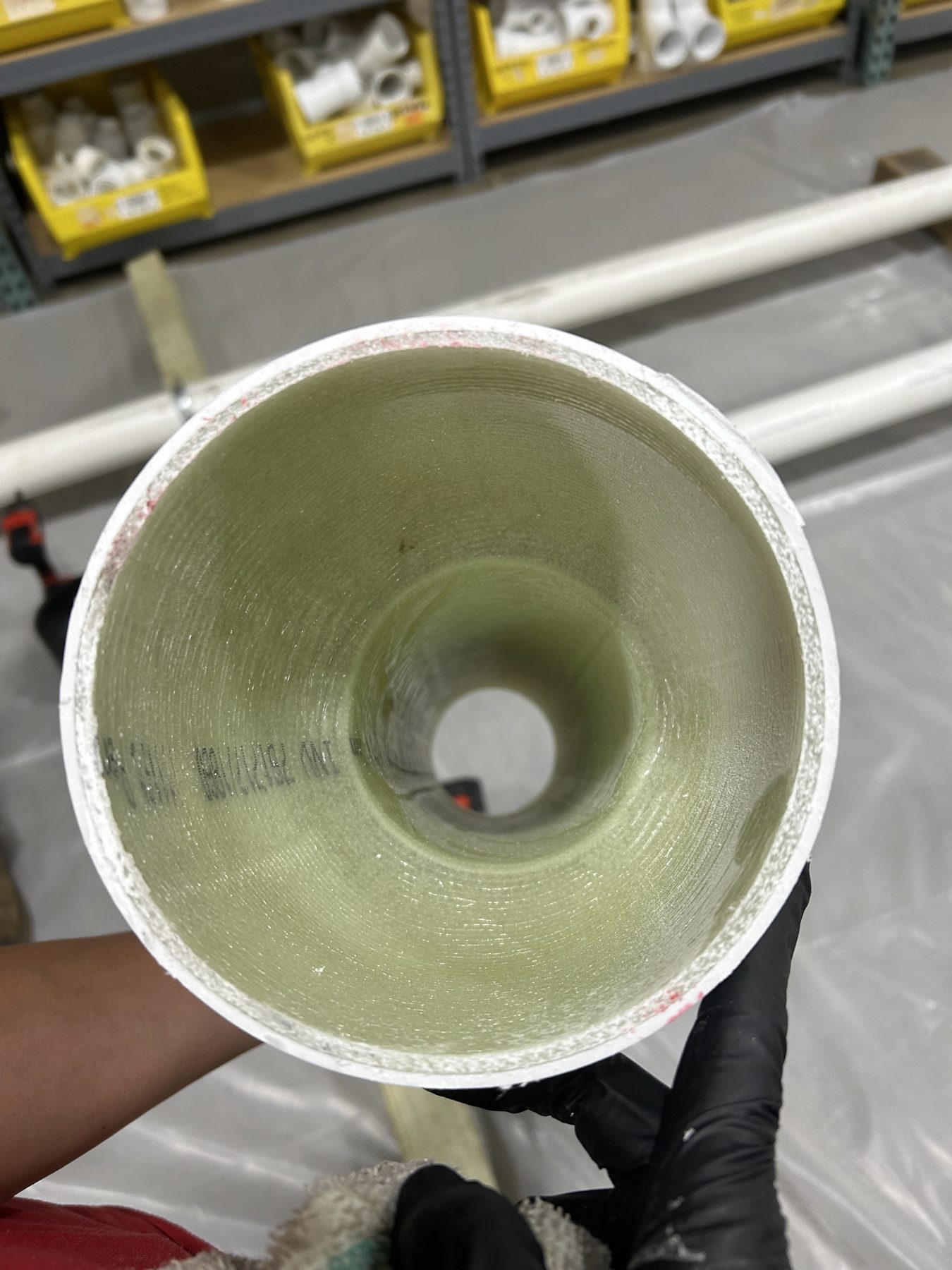
Trenchless Sewer Repair & Pipe Lining
No trench. No restoration bill.
Carolina Pipe Pros is the Columbia-area specialist for trenchless pipe lining (CIPP) — rebuilding broken sewer and drain pipes from the inside without excavation. No torn-up yard, no destroyed driveway, no week of restoration work. Most residential jobs finish in a single day and the finished liner is engineered to last 50 years or more.
What Trenchless Pipe Lining Is
Trenchless pipe lining — sometimes called cured-in-place pipe (CIPP) lining or simply "pipe relining" — is a method for rehabilitating a damaged underground pipe without digging it up. A resin-saturated flexible liner is inserted through an existing access point (usually a cleanout), inflated so it presses tightly against the inside of the host pipe, then cured with hot water, steam, or ultraviolet light. Once cured, the liner is a seamless, structurally independent new pipe formed inside the old one.
The advantage over traditional dig-and-replace is straightforward: no excavation. Your lawn, driveway, patio, landscaping, and interior floors stay intact. Restoration costs — which on a conventional sewer replacement can rival or exceed the plumbing work itself — drop to near zero.
Every job starts with a sewer camera inspection so we know exactly what we're working with. Once we've confirmed the pipe is a candidate for lining, the installation itself moves through four stages:
Most single-family residential jobs — cleaning, lining, and final inspection — finish inside a normal workday.
CIPP lining is designed to address structural deterioration, not full collapse. It fixes:
If a pipe is completely collapsed, badly offset at a joint, or belly-shaped (sagging with standing water), lining is usually not appropriate. In those cases we'll either recommend a different trenchless method or a targeted excavation for that specific section. We tell you the truth about which method fits — pushing lining where it doesn't work would embarrass us more than it would help you.
CIPP works on essentially any pipe material as long as the host pipe still holds its shape:
Diameters typically range from 2" branch lines up through 12"+ mainlines. If you have a mixed-material run (say, cast iron transitioning to clay at the property line), that's not a problem — the liner spans material transitions cleanly.
The choice usually comes down to five factors: cost, time, disruption, restoration expense, and lifespan. Trenchless wins on all five in the vast majority of residential and light-commercial cases:
Pricing depends on pipe diameter, run length, access (does a cleanout exist, or do we need to install one?), and how much prep the line needs before lining. As a rough guide, expect $80 to $250 per linear foot installed. Most residential sewer lining jobs in the Columbia area land between $4,000 and $15,000 total.
We provide a written quote after the camera inspection — never before. Anyone quoting you a firm number without seeing the pipe is guessing. If you'd like a preliminary range based on your situation, use our quick estimator tool.
Trenchless lining almost always comes packaged with other work. If any of these are what you actually need, we handle them too:
- Clean and prep the host pipe. Roots are cut back, buildup is jetted or milled, and the pipe is scoured smooth so the liner adheres properly.
- Measure and saturate the liner. A liner cut to the exact length of your damaged run is saturated with a two-part epoxy or vinyl-ester resin.
- Insert and inflate. The liner is inverted or pulled into place through an existing access point, then inflated with air, water, or steam until it presses fully against the pipe wall.
- Cure and final inspect. The resin cures for a controlled amount of time (typically a few hours with steam), then the finished liner is camera-inspected end to end to confirm a smooth, watertight result.
- Cracks and longitudinal splits — especially common in older cast iron and Orangeburg pipes.
- Root intrusion — the liner seals joints and cracks that let roots in, without needing to be dug out.
- Corrosion and channeling — the bottom-wear you see in older cast iron drains, where waste flow has eaten through the pipe wall.
- Small holes and infiltration points — anywhere groundwater is leaking into the sewer, or sewage is leaking out.
- Deterioration of Orangeburg pipe — the tar-and-fiber material used in many mid-century homes deforms and delaminates with age; lining reinforces the original run without excavation.
- Cast iron
- Clay (vitrified clay pipe)
- Orangeburg
- PVC and ABS
- Concrete
- Ductile iron
- Your property stays intact. No dug-up yard, no torn-up driveway, no cracked patio. Landscaping and hardscape are preserved.
- The job is fast. Most residential lining jobs finish in one day. A comparable dig-and-replace can take a week or more.
- You skip restoration costs. Concrete pours, sod, driveway repair, and interior floor work often add thousands to an excavation quote. Trenchless has none of that.
- The liner outlasts many replacements. 50+ year engineered lifespan, seamless, root-proof, corrosion-resistant.
- Sewer camera inspection — the diagnostic that comes before every lining decision.
- Hydro jetting — high-pressure water cleaning; often used to prep a line before lining.
- Drain cleaning — clearing the immediate blockage while we assess whether lining is the long-term answer.
- CIPP sewer lining (technical details) — a deeper look at the specific method.
Get a Free Camera Inspection Before Any Work Begins.
We diagnose your line with a sewer camera, walk you through what we see, and quote in writing before we touch anything. Free inspections in Columbia & Lexington — ask about your area.
Our solution
Trenchless pipe lining
Our UV cured-in-place pipe (CIPP) system restores damaged pipe from the inside out, forming a new structural pipe within the existing one. No trench, no torn-up property.
- No excavation
- Minimal disruption to residents, tenants, and daily operations
- Long-lasting results that prevent future problems
- Works on sanitary, storm, and other gravity-flow pipe
- Fits pipe from 3 inches to 8 inches in diameter
Pipe materials we rehabilitate
- Vitrified clay (VCP)
- Cast iron
- PVC
- Orangeburg
- Concrete
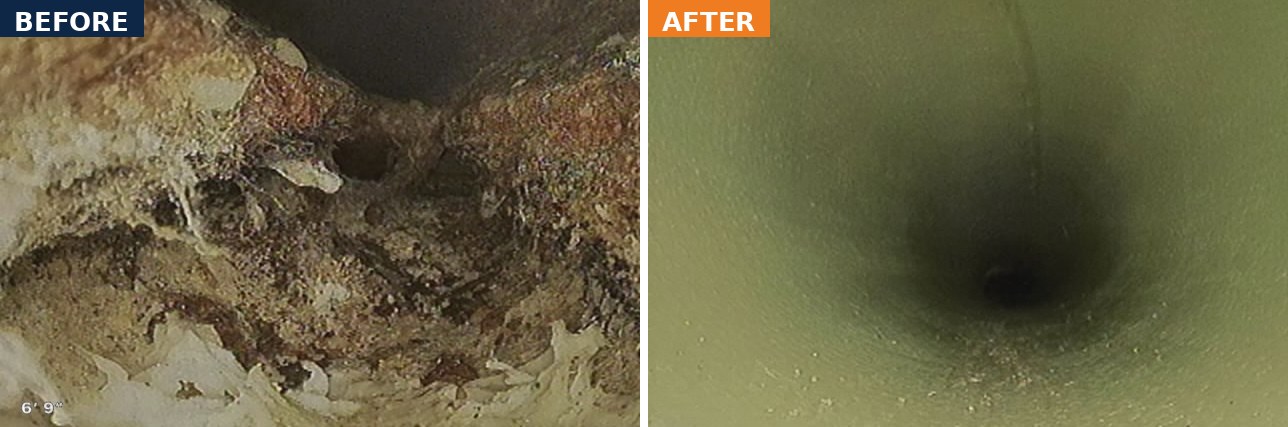
What you avoid
Conventional replacement may add
- Excavation and backfill
- Landscaping and hardscape restoration
- Asphalt or concrete replacement
- Traffic control and permitting
- Longer project timelines
- Increased tenant or occupant disruption
Every one of those is a line item on a dig-and-replace quote. Lining removes most of them.
How a lining job runs
Our proven process
Five steps start to finish. Most residential laterals are done in a day, and the yard, driveway, or parking lot stays exactly where it is.
Inspect
We run a CCTV camera through the line to find the fault and verify the pipe's condition before recommending anything.
Clean
High-pressure jetting strips roots, grease, and scale so the liner bonds to a clean host pipe.
Line
A resin-saturated liner goes in through an existing access point and is positioned inside the damaged pipe.
Cure
UV light cures the liner in place, forming a strong, seamless new pipe inside the old one.
Reinstate
Service is restored and verified on camera. We leave the property the way we found it.
Project record
What the work actually looks like
Real jobs, real photos. Scope details are listed plainly so you can judge whether your situation matches.
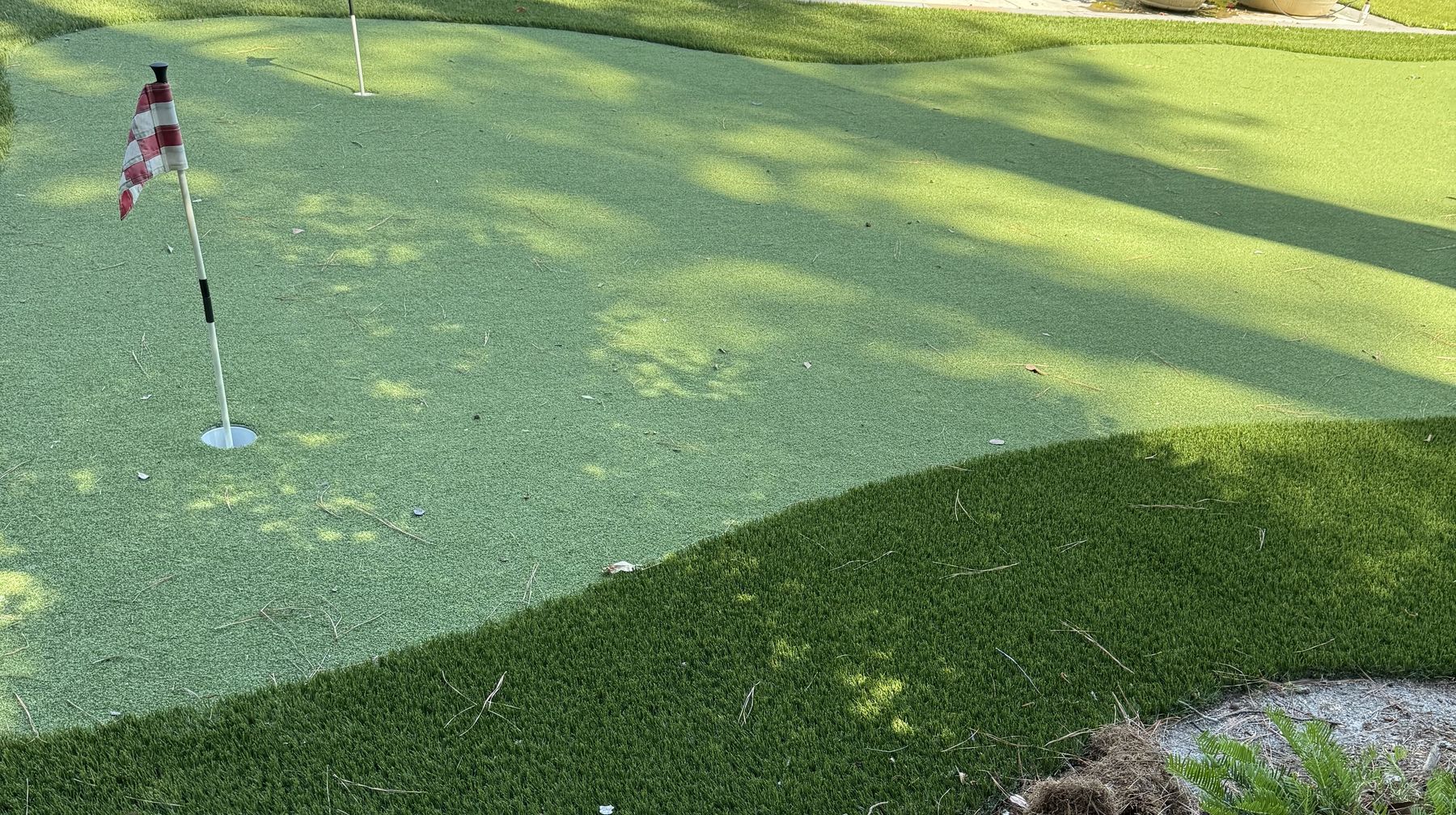
Lined beneath a putting green
The line running under this green and pool deck was rehabilitated through the cleanout visible in the pine straw at the edge of the turf. That access point is the only evidence the work happened. No turf lifted, no deck cut, no planting beds disturbed.
- Setting
- Putting green & pool deck
- Access
- Existing cleanout
- Excavation
- None
- Restoration
- None required
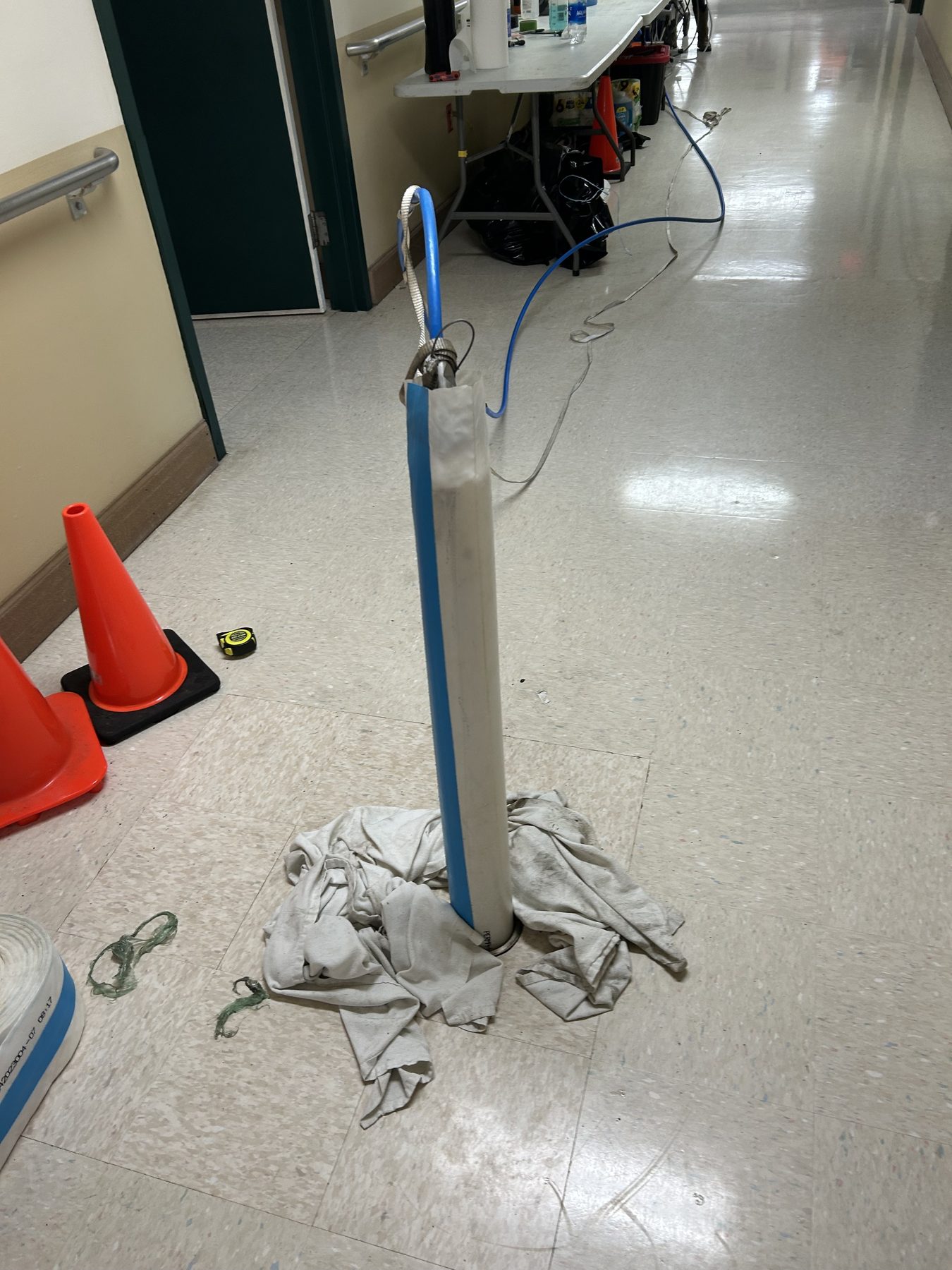
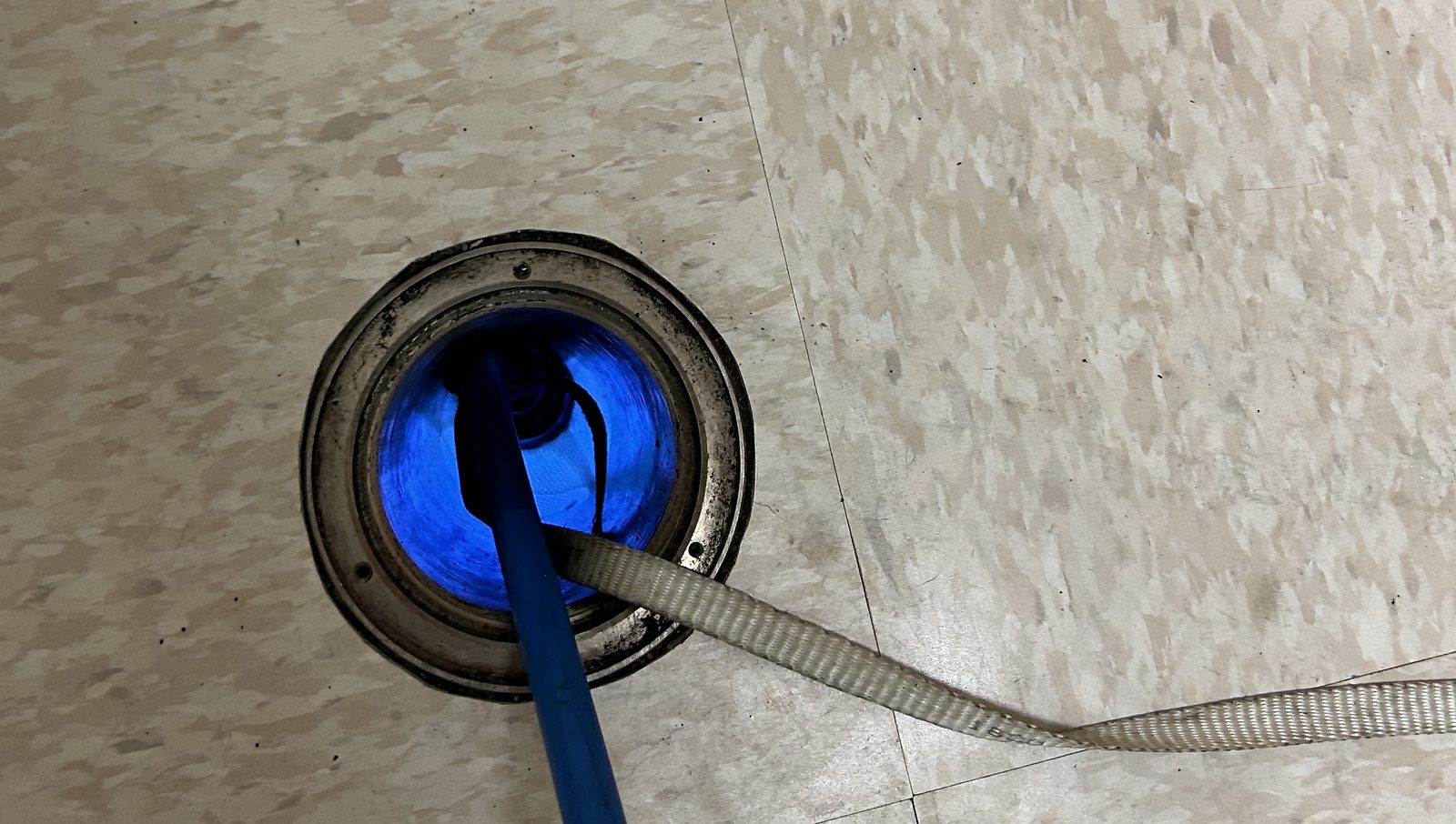
Occupied facility, corridor lining
Sanitary line rehabilitated inside a live building. Work staged behind cones and drop cloths in an active corridor, with the space handed back at the end of each shift. No excavation, no closure, no relocated occupants.
- Setting
- Occupied building
- Access
- Existing cleanout
- Excavation
- None
- Closure
- None
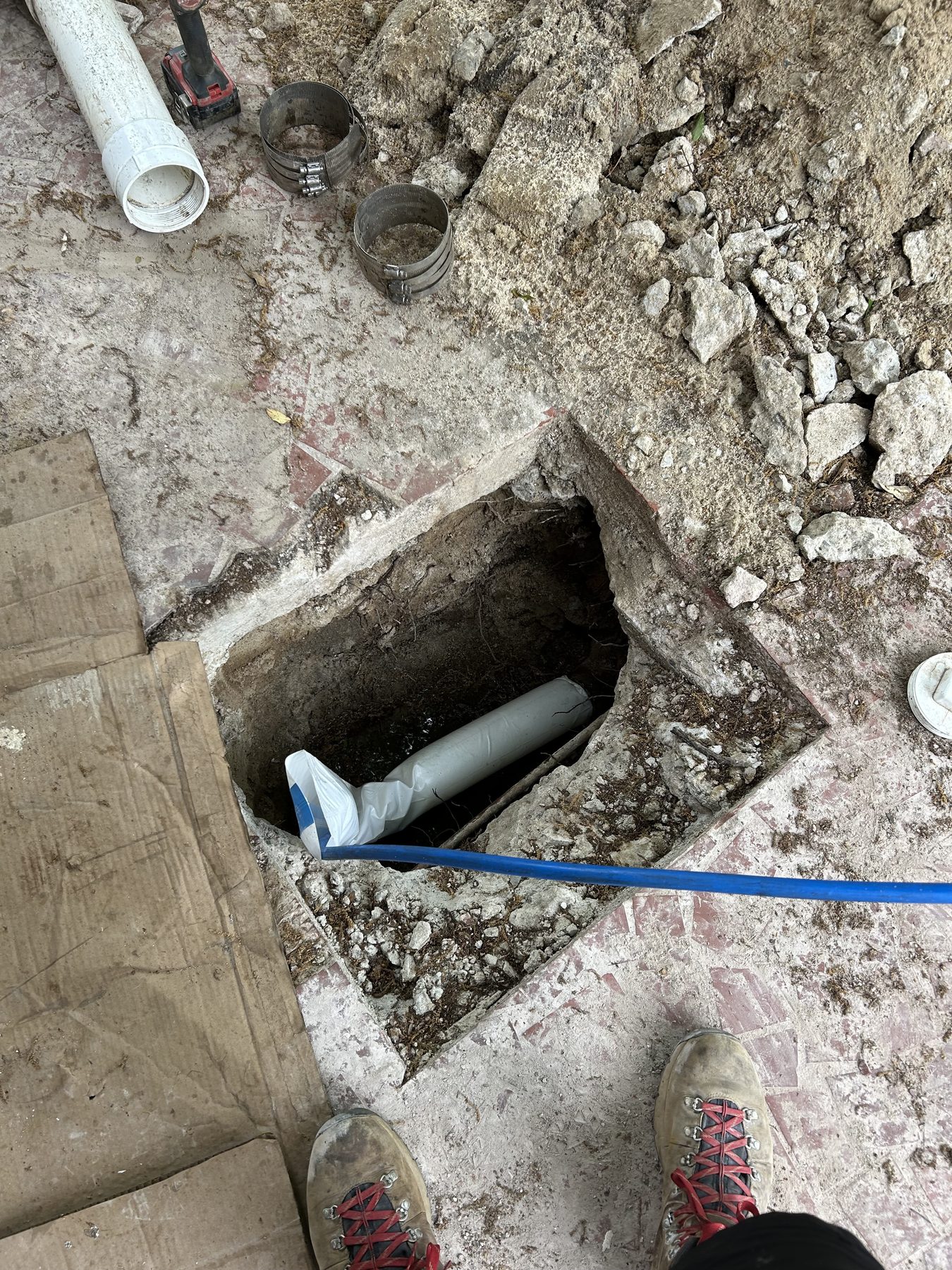
Under slab and hardscape
Where a line runs beneath concrete, a single small access point replaces a full trench. The liner is drawn through the damaged section and cured, leaving the surrounding slab, drive, and walkways intact.
- Setting
- Under concrete
- Access
- Single access point
- Excavation
- Minimal
- Slab replaced
- No
Commercial & institutional
Fix the pipe. Don't close the property.
A pipe failure at a multi-tenant or institutional property is never only a plumbing problem. It's occupant complaints, liability exposure, and unplanned capital spend. We inspect aging infrastructure before it fails and repair it without excavation, road plates, or lost parking.
- Avoid unplanned emergency repairs and occupant complaints
- Protect curb appeal, landscaping, and property value
- Reduce liability from backups, sinkholes, and property damage
- Extend the life of underground infrastructure
- Plan proactively and budget more effectively
Where we work
Service areas
Full service
Pipe lining, camera inspection, jetting, drain cleaning, and sewer replacement.
Pipe lining statewide
Trenchless CIPP lining, anywhere in South Carolina.
Frequently asked
Trenchless Sewer Repair & Pipe Lining questions
What is cured-in-place pipe (CIPP) lining?
CIPP lining installs a resin-saturated flexible tube inside your existing sewer or drain pipe. Once inserted, it's inflated against the pipe walls and cured — hardened — with hot water, steam, or UV light. The result is a seamless new pipe formed inside the old one, without any digging. In the Columbia, SC area, most residential CIPP jobs finish in a single day.
How long does a trenchless pipe liner last?
Properly installed CIPP liners are engineered to last 50 years or more. They're seamless (no joints for roots to invade), corrosion-resistant, and hydraulically smoother than the original pipe, which often improves flow. Most CIPP systems carry manufacturer warranties in addition to workmanship warranties.
What kinds of pipe can be relined?
Cast iron, clay, Orangeburg, PVC, ABS, and concrete pipes can all typically be relined as long as the host pipe still holds its shape. We confirm suitability with a sewer camera inspection first. If a pipe is fully collapsed or badly offset, we'll say so and walk you through options.
What damage does trenchless lining fix?
Cracks, root intrusion, small holes, longitudinal splits, channeling (bottom wear), corrosion, and general age deterioration. The liner seals the pipe from the inside, restoring structural integrity and blocking roots and infiltration. Fully collapsed pipes usually require a different approach (like pipe bursting or excavation).
How much does trenchless pipe lining cost in Columbia, SC?
Trenchless lining typically runs $80 to $250 per linear foot installed, depending on pipe diameter, access, and prep required. Most residential sewer lining jobs in the Columbia area land between $4,000 and $15,000. Every quote is written and provided after a camera inspection — no guessing.
Is trenchless lining better than digging up the pipe?
In most cases, yes. Traditional excavation destroys yards, driveways, and interior floors, and restoration costs alone can equal or exceed the pipe repair. Trenchless leaves the property intact, usually finishes in a day, and the finished liner often outlasts a like-for-like replacement. Excavation still makes sense in specific cases — full collapse, severely offset joints, or lines too shallow to access without digging.
Do you serve areas outside Columbia, SC?
Yes. Our service area covers Columbia and about our service area in every direction — including Lexington, Irmo, West Columbia, Cayce, Blythewood, Chapin, Forest Acres, Camden, Newberry, Sumter, and Orangeburg. If you're not sure whether you're in range, just call.
Let's solve the problem — without disrupting your property.
Call or text for a camera inspection and a straight answer about whether the line needs lining, cleaning, or replacement.
Call or text 803-814-5544